Find real time sampling handheld oscilloscope for Power, Voltage, and Frequency
Source 30 units of real time sampling handheld oscilloscope for electric power, voltage, and frequency measurement. Compare specifications including bandwidth, memory depth, and sampling rates from verified suppliers to find the right instrument for your testing needs.
Key considerations
Products List


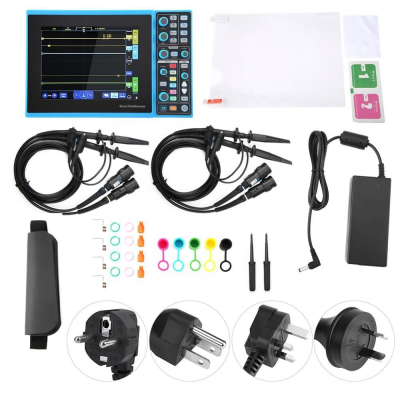




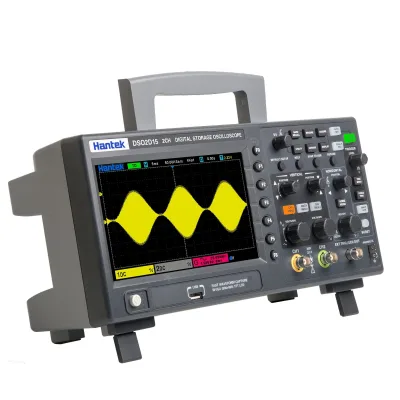


Comprehensive Sourcing Guide
Strategic Sourcing Guide for Real-Time Sampling Handheld Oscilloscopes
The procurement of handheld oscilloscopes capable of real-time sampling represents a critical decision point for engineering teams requiring portable yet high-performance diagnostic tools. Unlike benchtop units, handheld devices must balance compact form factors with the rigorous demands of field measurements, often in electric power, impedance, and temperature monitoring environments. This guide synthesizes observed market data and technical specifications to provide a disciplined framework for evaluating suppliers and selecting equipment that meets specific operational needs without relying on unverified marketing claims.
Technical Architecture and Sampling Capabilities
The core differentiator for any oscilloscope in this category is its sampling architecture. Real-time sampling is essential for capturing transient events that occur at high speeds, ensuring that the waveform is reconstructed accurately without the aliasing artifacts common in equivalent-time sampling methods. In the current market, observed specifications reveal a wide variance in performance. Some units operate at a sampling rate of 200 MSa/s, suitable for general-purpose measurements, while others in the high-end segment offer rates up to 2 GSa/s or even 10 Gsa/s when utilizing interleaved channel operations.
Buyers must scrutinize the distinction between single-channel and dual-channel operation. A device may advertise a peak rate of 2 GSa/s in a single-channel interleaved mode, but this often drops to 1 GS/s per channel when both inputs are active. This trade-off is critical for applications requiring simultaneous multi-point analysis. Furthermore, the memory depth is a limiting factor for signal fidelity. Observed data indicates memory depths ranging from 1 Mpts to 28 Mpts. A deeper memory depth, such as 28 Mpts, allows for the capture of long-duration signals with high resolution, whereas a 1 Mpt depth is sufficient for short, high-frequency bursts. The waveform capture rate, observed in the range of 110,000 to 50,000 wfms/s, determines how effectively the instrument can detect rare glitches or intermittent faults.
| Feature Category | Low-End Observation | High-End Observation | Procurement Implication |
|---|---|---|---|
| Sampling Rate | 200 MSa/s | 2 GSa/s (Interleaved) | Verify if the rate applies to single or dual-channel use. |
| Memory Depth | 1 Mpts | 28 Mpts | Deeper memory is required for long-duration, high-res capture. |
| Capture Rate | 30,000 wfms/s | 110,000 wfms/s | Higher rates improve detection of sporadic anomalies. |
| Vertical Resolution | 8 Bits | 8 Bits | Resolution remains consistent; focus on sampling rate. |
Structural Design and Operational Form Factors
The physical structure of the device dictates its suitability for specific field environments. The "Handheld" classification is a primary requirement for this search, distinguishing these units from desktop or rack-mounted alternatives. Handheld structures are designed for portability, often featuring integrated batteries and ruggedized casings. However, the market also contains "Desktop" models that may be misclassified or offered as part of a broader product line. Buyers must verify the structural classification explicitly, as a desktop unit lacks the portability required for on-site electric power or magnetic field measurements.
The form factor also influences the user interface and connectivity. Handheld units typically prioritize a compact footprint, with dimensions observed around 19.9 x 9.8 x 4 inches for certain models. This size constraint limits the number of physical controls and screen real estate, necessitating a reliance on intuitive software interfaces or smartphone integration. Additionally, the trigger modes available on handheld units vary from automatic to conventional. Automatic triggers are beneficial for general troubleshooting where the signal characteristics are unknown, while conventional triggers offer precise control for repetitive signals. The application scope is broad, covering voltage, frequency, phase, and displacement measurements, which requires the device to support a versatile array of input sensors and probes.
Compliance, Standards, and Certification Verification
In the B2B procurement of electronic test equipment, compliance is not merely a formality but a prerequisite for operational safety and data integrity. The supplied data indicates that products originate from specific regions, such as Shandong, China, and the United States, each with different regulatory frameworks. While specific certification numbers are not universally listed for every model, buyers must verify adherence to relevant international standards. One observed standard reference is "60," which may correspond to specific industry or safety norms, though the exact nature of this standard requires confirmation from the supplier's documentation.
When evaluating a supplier, the buyer should request evidence of compliance with electromagnetic compatibility (EMC) and safety standards appropriate for the region of operation. For instance, equipment manufactured in the United States must typically comply with FCC regulations, while units from China may adhere to GB standards or international equivalents. The "prod_standard" value of 20 or 40 observed in the data suggests varying levels of compliance or internal quality benchmarks, but these should not be assumed to represent external certifications without verification. Buyers must ensure that the device meets the safety requirements for the specific application environment, such as high-voltage electric power measurement, where isolation and creepage distances are critical.
Cost Drivers and Total Cost of Ownership
The price range for handheld oscilloscopes is substantial, spanning from approximately $16.59 to $26,039. This vast disparity is driven by several key factors, including bandwidth, sampling rate, memory depth, and the presence of built-in signal sources. Units with a bandwidth of 1 GHz or less generally fall into the lower price tier, while those exceeding 2 GHz or offering advanced features like built-in signal sources command a premium. The presence of a built-in signal source is a significant cost driver; some models include this feature for self-testing and calibration, while others do not, requiring external equipment.
Beyond the initial purchase price, the total cost of ownership (TCO) must be considered. This includes the cost of accessories, such as probes and cables, which are often sold separately. The minimum order quantity (MOQ) is another financial factor, with observed ranges from 1 to 5 units. For small teams or pilot projects, an MOQ of 1 is advantageous, whereas larger deployments may benefit from bulk pricing, though the specific discount structure is not standardized. Buyers should also factor in the cost of maintenance and calibration, as high-performance instruments require regular verification to maintain accuracy. The "Customization" attribute is another cost variable; while some suppliers offer customization, others explicitly state that no support is available, which can impact the final price and lead time.
Supplier Evaluation and Origin Considerations
Selecting a supplier requires a careful assessment of their geographic origin and manufacturing capabilities. The data indicates a split between suppliers based in Shandong, China, and those in the United States. Each origin presents distinct advantages and risks. Chinese manufacturers often provide competitive pricing and a high degree of customization support, as indicated by the "Available" customization attribute for certain models. However, buyers must verify the consistency of quality control and the availability of after-sales support.
Conversely, suppliers from the United States may offer higher perceived reliability and adherence to domestic safety standards, as seen with models labeled "American" or "America." However, these units may have stricter limitations on customization, with some explicitly stating "Customization Is Not Supported." The "prod_model" identifiers, such as 2D42, U1620A, and DSOX6002A, serve as unique identifiers for these products, but buyers should not assume that a specific model number guarantees a specific feature set without cross-referencing the detailed specification sheet. The "Kind" attribute, distinguishing between "Digital Oscilloscope" and "Analog Oscilloscope," is also critical; while the search term focuses on real-time sampling, which is predominantly a digital feature, some listings may conflate the two categories. Buyers must ensure the device is explicitly a digital oscilloscope to guarantee the required sampling capabilities.
Quality Control and Long-Term Procurement Strategy
Quality control in the oscilloscope market is multifaceted, involving both the manufacturing process and the post-delivery verification. The "Maximum Memory Depth" and "Maximum Sample Rate" are key performance indicators that should be validated through third-party testing or factory acceptance tests (FAT). For instance, a device claiming 20 Gsa/s on half channels and 10 Gsa/s on full channels must be tested under load to ensure these rates are sustained. The "Vertical Resolution" of 8 bits is a standard baseline, but buyers should verify if the device supports higher resolution modes or if the 8-bit limit is a hard constraint.
Long-term procurement considerations extend beyond the initial purchase to include the lifecycle of the instrument. The "Product Name" and "Structure" attributes suggest that some units are designed for specific applications, such as the Hantek 2c72 Handheld Oscilloscope, which may have a dedicated ecosystem of accessories. Buyers should evaluate the supplier's commitment to firmware updates and software support, as these are crucial for maintaining the device's relevance as measurement standards evolve. The "Packing" attribute, listed as "Box," is a basic requirement, but the quality of packaging can impact the device's safety during shipping, especially for delicate handheld units. Finally, the "Application" list, which includes temperature, pressure, and magnetic field measurements, indicates the versatility of the device, but buyers must ensure that the specific probes and interfaces required for these applications are compatible and available from the same supplier to avoid integration issues.
Conclusion
Sourcing a real-time sampling handheld oscilloscope requires a meticulous approach that balances technical specifications with practical procurement constraints. The market offers a diverse range of options, from basic 200 MSa/s units to advanced 2 GSa/s models with deep memory. Buyers must navigate the complexities of sampling rates, memory depths, and structural designs to find a device that aligns with their specific application needs. By rigorously verifying compliance, understanding cost drivers, and evaluating supplier capabilities, procurement teams can secure instruments that deliver reliable performance in the field. The ultimate goal is to select a solution that not only meets the immediate technical requirements but also supports long-term operational efficiency and data integrity.
FAQs
What is the maximum sampling rate for real time sampling handheld oscilloscopes?
The maximum sampling rate observed is 20 Gsa/s on half channels and 10 Gsa/s on full channels. Some models offer lower rates like 200 MSa/s or 2 GSa/s depending on the specific configuration and channel operation mode selected.
Which memory depth options are available for these handheld devices?
Memory depth ranges from 1 Mpts to 28 Mpts across different models. Specific units may offer 7 Mpts or 500 mpts, with some devices providing 4 Mpts on half channels and 2 Mpts on all channels simultaneously.
Can I find handheld oscilloscopes with built-in signal sources?
Yes, some models include a built-in signal source while others do not. Buyers must verify the specific product attributes as availability varies significantly between different manufacturers and product lines in the current market.
What is the typical price range for real time sampling handheld oscilloscopes?
The observed price range spans from approximately 16.59 USD to 26039 USD. This wide variance depends heavily on specifications like bandwidth, sampling rate, memory depth, and whether the unit includes a built-in signal source.
How does the structure of these oscilloscopes affect their portability?
Handheld structures are designed for portability with compact dimensions like 19.9 by 9.8 by 4 inches. This form factor distinguishes them from desktop units and makes them suitable for field measurements in power or magnetic field environments.
Are customization options available for these oscilloscope models?
Customization is available for some models but explicitly not supported for others. Buyers should check the specific product attributes as support varies by manufacturer and model, impacting lead times and final pricing.
What trigger modes are supported by these handheld instruments?
Trigger modes include automatic and conventional options depending on the specific device. Automatic triggers assist with general troubleshooting, while conventional modes offer precise control for repetitive signals in electric power or impedance measurements.